
I recognize that I've neglected your page for awhile but I wanted to make sure I found the best sites I could for this topic so you can come to this entry at any time and find links to reliable sources. I'm certain that I am providing you with links to sites that will be able to answer any questions you can imagine related to sex.
Sexual health is an incredibly important topic and one some adults avoid discussing. I'm going to share trusted links to try to help you navigate this topic in case you are a teen being given little, inappropriate, or inaccurate information. I'm very aware that different families and cultures have their views on when you should become sexually active. I'm not here to insert my values. Understand that I have taught teens long enough to know that lacking information can lead to unhealthy risk-taking. Relying on peers or older students often lends to taking on misinformation as fact. My goal is that you are informed and you decide when the time is right for you based on your values. When the time is right, I want you to stay healthy: physically, intellectually, emotionally, and socially. I want you to respect that not everyone shares your values and what works for you might not feel right for someone else. So, let's get started.
The World Health Organization (2016) defines sexual health as "a state of physical, mental and social well-being in relation to sexuality. It requires a positive and respectful approach to sexuality and sexual relationships, as well as the possibility of having pleasurable and safe sexual experiences, free of coercion, discrimination and violence."
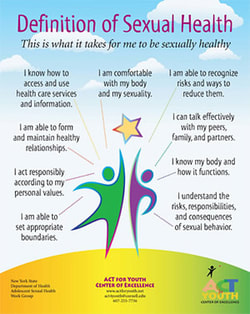
I love this poster from ACT Youth. Before you even think you are ready for a sexual relationship, can you say that you have what it takes to be sexually healthy?
The World Health Organization (2016) defines sexual health as "a state of physical, mental and social well-being in relation to sexuality. It requires a positive and respectful approach to sexuality and sexual relationships, as well as the possibility of having pleasurable and safe sexual experiences, free of coercion, discrimination and violence."
I love this poster from ACT Youth. Before you even think you are ready for a sexual relationship, can you say that you have what it takes to be sexually healthy?
Act responsibly according to values
Values are your judgment of what is important in life. Have you given much thought to what your values are? You will find that once you have a clear idea of your core values (use the sort cards activity below as a starting point), choosing to make decisions with your values in mind means you will tend to feel much better about the decisions.
One struggle you might face is when you find that your values do not fully align with the values of others. For instance, someone might comment that the LGBTQ community are all sinners and you are quite open to the LGBTQ community or one group of friends values waiting until marriage for sex and another group is open to having different sexual experiences before marriage. Obviously your parents and other role models are trying to instill values in you that they find important. If your parents are not particularly fond of someone you are dating, give some thought to how that person's values align with your parents' values. Be clear on your values and understand that values are not set in stone. Your values might adjust with your life experiences. Take time to try this quick activity to determine which values are most important to you.
Value sort cards - The Good Project
One struggle you might face is when you find that your values do not fully align with the values of others. For instance, someone might comment that the LGBTQ community are all sinners and you are quite open to the LGBTQ community or one group of friends values waiting until marriage for sex and another group is open to having different sexual experiences before marriage. Obviously your parents and other role models are trying to instill values in you that they find important. If your parents are not particularly fond of someone you are dating, give some thought to how that person's values align with your parents' values. Be clear on your values and understand that values are not set in stone. Your values might adjust with your life experiences. Take time to try this quick activity to determine which values are most important to you.
Value sort cards - The Good Project
Forming and maintaining healthy relationships
In the last blog, I shared about the importance of being able to have healthy friendships. Before you consider dating or sex, you should feel confident about yourself and you should have healthy friendship groups. You might want to quickly review the information I shared.
Most of us learn how to be in relationships from our parents and other couples close to our family or from what we see in the media. Here are some links you can look at to help you decide if the relationships around you are healthy. Take the lists they provide and look at some music videos, TV shows and movies. Evaluate these couples and those you have in your close family circle.
Building confidence and self-esteem - Psychology Today
Steps to improve self-esteem - Reach Out
Lists of healthy and unhealthy behaviors - Teen Health
5 components of healthy relationships - Planned Parenthood
Quiz to determine if relationship is healthy - Love Is Respect
Quiz to determine if you are a good partner - Love Is Respect
Healthy relationships quiz - Mensline
If you are concerned about being in an unhealthy relationship or have a friend in one, find a trusted adult to talk to about the situation.
Most of us learn how to be in relationships from our parents and other couples close to our family or from what we see in the media. Here are some links you can look at to help you decide if the relationships around you are healthy. Take the lists they provide and look at some music videos, TV shows and movies. Evaluate these couples and those you have in your close family circle.
Building confidence and self-esteem - Psychology Today
Steps to improve self-esteem - Reach Out
Lists of healthy and unhealthy behaviors - Teen Health
5 components of healthy relationships - Planned Parenthood
Quiz to determine if relationship is healthy - Love Is Respect
Quiz to determine if you are a good partner - Love Is Respect
Healthy relationships quiz - Mensline
If you are concerned about being in an unhealthy relationship or have a friend in one, find a trusted adult to talk to about the situation.
Able to set appropriate boundaries
When you are in a healthy relationship, you should be able to communicate your boundaries clearly without the fear of the other person reacting negatively. For those of you who are just starting to hang out with someone you like, talk about whether or not you are comfortable with:
If you have reached a level of maturity where you are mutually and respectfully wanting to take your relationship to the next level of being physically intimate, refer to this sex readiness checklist to determine if you truly are ready.
4 signs you are about to have sex for the wrong reason - Stay Teen
If you decide you are ready, that means you should be willing to use and discuss one of the following checklists to help you determine your boundaries for sexual activity:
teenhealthsource sexual inventory checklist
Yes, no, maybe checklist - very detailed for mature couples - Scarlateen
Have these discussions before you find yourself in the heat of a moment and be sure to re-visit your boundaries regularly. If you look at the inventories and do not understand the terms, the sites have vocabulary sections and/or search options.
Here are a few quick reads that might add to your understanding of setting boundaries:
sex,etc
loveisrespect
- remaining friends or "going out"/ "dating"
- hanging out in a small group or as a pair at school
- meeting outside of school in public spaces in a small group or as a pair
- posting your relationship on social networking for all friends to see, a select few, or none
- flirting with each other, holding hands, peck on the cheek, quick kiss on the lips, french kissing, none of these
- communicating your feelings openly with each other.
If you have reached a level of maturity where you are mutually and respectfully wanting to take your relationship to the next level of being physically intimate, refer to this sex readiness checklist to determine if you truly are ready.
4 signs you are about to have sex for the wrong reason - Stay Teen
If you decide you are ready, that means you should be willing to use and discuss one of the following checklists to help you determine your boundaries for sexual activity:
teenhealthsource sexual inventory checklist
Yes, no, maybe checklist - very detailed for mature couples - Scarlateen
Have these discussions before you find yourself in the heat of a moment and be sure to re-visit your boundaries regularly. If you look at the inventories and do not understand the terms, the sites have vocabulary sections and/or search options.
Here are a few quick reads that might add to your understanding of setting boundaries:
sex,etc
loveisrespect
Understanding consent
Please make sure you understand the meaning of consent, which is actively agreeing to be sexual with someone. Under no circumstances should you assume what someone wants to do, nor should you assume because you've tried something once with a partner that you can do the same thing again. Be clear about asking for consent as a way of showing your maturity and mutual respect for your partner. Always remember that different people have different values and comfort levels.
Sexual consent - Planned Parenthood
Saying no is no problem - Stay Teen
Intimate ways to ask a partner about sex - Go Ask Alice
Why consent matters - MTV: It's Your (Sex) Life
Sexual consent - Planned Parenthood
Saying no is no problem - Stay Teen
Intimate ways to ask a partner about sex - Go Ask Alice
Why consent matters - MTV: It's Your (Sex) Life
| | |
Comfortable with and knowledgeable about my body
Take time to learn about your body. You learn about the reproductive system of males and females at school but you should also learn about sexual anatomy. When the time is right for you to be sexually active, you want to enjoy the experience, right?
Basics of female reproductive system - as taught to 11-13 year olds - Teen Health
Basics of male reproductive system - as taught to 11-13 year olds - Teen Health
Male and female reproductive anatomy worksheets - labeled and unlabeled by Manitoba Education and Training
Once you understand the reproductive system, it's helpful to understand anatomy related to sexual pleasure.
Sexual and reproductive anatomy - Planned Parenthood
For those who are ready to have a detailed explanation of sexual anatomy - Scarleteen
Sexual response cycle - Medicinenet
In every sex ed course I've taught, teens have asked about masturbation. These links provide basic information and some common myths. Masturbation is one way that people can learn about their bodies.
Information on masturbation - Teen Health Source
Masturbation and myths - Sex,etc
What exactly is sexual intercourse? What does it mean when people say anal or oral sex? What does (insert slang sexual term) mean?
Sex terms from a-z, including slang - Sex,etc
Sex terms from a-z, including slang - Teen Health Source
What is sex? - Scarlateen
There are a lot of myths about how pregnancy occurs.
Can a girl get pregnant if..? - Stay Teen
Other common questions are what are orgasms and do women have orgasms?
What are orgasms? - Sex,etc
For those with a variety of questions about orgasms - Go Ask Alice of Columbia University
Are male and female orgasms different? - Go Ask Alice
The science of women's pleasure - OMGYes
Basics of female reproductive system - as taught to 11-13 year olds - Teen Health
Basics of male reproductive system - as taught to 11-13 year olds - Teen Health
Male and female reproductive anatomy worksheets - labeled and unlabeled by Manitoba Education and Training
Once you understand the reproductive system, it's helpful to understand anatomy related to sexual pleasure.
Sexual and reproductive anatomy - Planned Parenthood
For those who are ready to have a detailed explanation of sexual anatomy - Scarleteen
Sexual response cycle - Medicinenet
In every sex ed course I've taught, teens have asked about masturbation. These links provide basic information and some common myths. Masturbation is one way that people can learn about their bodies.
Information on masturbation - Teen Health Source
Masturbation and myths - Sex,etc
What exactly is sexual intercourse? What does it mean when people say anal or oral sex? What does (insert slang sexual term) mean?
Sex terms from a-z, including slang - Sex,etc
Sex terms from a-z, including slang - Teen Health Source
What is sex? - Scarlateen
There are a lot of myths about how pregnancy occurs.
Can a girl get pregnant if..? - Stay Teen
Other common questions are what are orgasms and do women have orgasms?
What are orgasms? - Sex,etc
For those with a variety of questions about orgasms - Go Ask Alice of Columbia University
Are male and female orgasms different? - Go Ask Alice
The science of women's pleasure - OMGYes
Understand about sexuality
What is sexuality?
Sexuality - Options for Sexual Health
Detailed explanation of sexuality - Scarleteen
Sex, gender, and orientation - Bedsider
Sexuality - Options for Sexual Health
Detailed explanation of sexuality - Scarleteen
Sex, gender, and orientation - Bedsider
Recognize risks involved and ways to reduce them
Abstinence is the only way to prevent pregnancy and STIs 100%. If you choose to have sex and are not interested in pregnancy or an STI, you need to make sure you are very clear on how to do your best to prevent both.
What are STIs?
What is an STI - New Zealand Family Planning
STI prevention - Healthy Children
STI symptoms - Mayo Clinic
Video on preventing STIs - Planned Parenthood
What types of birth control are available?
Birth control options - Stay Teen
Birth control methods - Bedsider
Birth control explorer - Stay Teen
Relative birth control effectiveness - Options for Sexual Health
Possibility of pregnancy or STI? - Scarleteen - shows levels of risk
Sexual behaviors and risks - Act For Youth
What are STIs?
What is an STI - New Zealand Family Planning
STI prevention - Healthy Children
STI symptoms - Mayo Clinic
Video on preventing STIs - Planned Parenthood
What types of birth control are available?
Birth control options - Stay Teen
Birth control methods - Bedsider
Birth control explorer - Stay Teen
Relative birth control effectiveness - Options for Sexual Health
Possibility of pregnancy or STI? - Scarleteen - shows levels of risk
Sexual behaviors and risks - Act For Youth
Know how to access and use health care services
Please ensure that you are talking openly with your family doctor, gynecologist, school nurse, or health clinic professionals about your sexual well-being. There is nothing that you can discuss with these individuals that they have not heard or read about during their training or practice. Trust me!
Screening tests by Options for Sexual Health
Want birth control but scared of visiting doctor - Go Ask Alice
What happens at an appointment (male and female) - Teen Health Source
First visit to gynecologist - Scarlateen
Dealing with doctors: Taking care of your healthcare destiny - Scarlateen
Screening tests by Options for Sexual Health
Want birth control but scared of visiting doctor - Go Ask Alice
What happens at an appointment (male and female) - Teen Health Source
First visit to gynecologist - Scarlateen
Dealing with doctors: Taking care of your healthcare destiny - Scarlateen
Resources I chose
There are endless resources on the topics I've shared in this entry. I have selected a few that I wanted you to revisit a few times so you could get a feel for those that appeal to you. I'm going to list them separately here so you can quickly visit each and determine which are most appropriate for you.
actforyouth.net
optionsforsexualhealth.org
plannedparenthood.org
stayteen.org
goaskalice.columbia.edu
MTVitsyoursexlife.com
sexetc.org
loveisrespect.org
teenhealthsource.com
kidshealth.org/en/teens
More mature readers:
bedsider.org
scarlateen.com
OMGYes.com
Additional Resources for parents and teachers:
Parent info on teens and dating by Raising Children
Research paper for parents on Puberty and Adolescent Sexuality by Fortenberry,MD,MS
Information for parents about masturbation by Healthy Children
LGBTQ by Healthy Children
Links to Sexual Orientation and Gender Identity by American Psychological Association
Research on teen pregnancies, abortions, HIV/STIs, and contraception use by Guttmacher
Article on the Dutch approach to sex ed by PBS
Information for men on relationships and well-being by Mensline in Australia
Tips for talking to teens about dating and relationships by Good Therapy
How to make healthy decisions about sex for teens by Healthy Children
Any question you could possibly think of about sexual and reproductive health by Go Ask Alice of Columbia University
Parent info on teens and dating by Raising Children
Research paper for parents on Puberty and Adolescent Sexuality by Fortenberry,MD,MS
Information for parents about masturbation by Healthy Children
LGBTQ by Healthy Children
Links to Sexual Orientation and Gender Identity by American Psychological Association
Research on teen pregnancies, abortions, HIV/STIs, and contraception use by Guttmacher
Article on the Dutch approach to sex ed by PBS
Information for men on relationships and well-being by Mensline in Australia
Tips for talking to teens about dating and relationships by Good Therapy
How to make healthy decisions about sex for teens by Healthy Children
Any question you could possibly think of about sexual and reproductive health by Go Ask Alice of Columbia University
























 RSS Feed